kgoruda.com

[카테고리:] Hair & Scalp

Korean hair and scalp care guides, routines and product information.

  • Low Porosity Hair and Oily Scalp? A Korean Shampoo Routine That Stays Light

    Your roots look oily by the next afternoon, but a mask or leave-in seems to sit on top of your hair. It is tempting to call this “low porosity” and buy a stronger shampoo. Pause before you do. The same pattern can come from too much conditioner near the roots, styling residue, or a wash that does not fully reach the scalp.

    The short answer: choose shampoo for how your scalp behaves, then use the smallest amount of conditioning your lengths need. Treat “low porosity” as a clue to test, not a diagnosis or a promise printed on a bottle.

    What does low porosity hair with an oily scalp actually mean?

    Two different surfaces, two different jobs

    Porosity describes how the hair fiber takes up and releases water. Oiliness describes what is happening at the scalp. You can have both at once. Neither tells you that every strand needs an oil-control shampoo from root to tip.

    If water seems slow to soak into your hair or a rich cream leaves a coating, you may suspect lower porosity. Those signs are not conclusive. Product residue, hair density, prior coloring and the amount of product used can change what you feel. The useful question is simpler: what happens after you change one part of the routine?

    Do not mistake dry ends for a dry scalp

    Look at where the problem appears. Shine at the part line a day after washing calls for a scalp decision. Rough ends after washing call for a length-care decision. Our oily scalp and dry ends shampoo guide compares those two needs in more detail.

    A three-wash check before buying another bottle

    Keep your current shampoo for three washes if it feels comfortable. Change only the application, then note what happens. This is a practical comparison, not a test that can prove porosity.

    Wash 1: Find the oil timeline

    Note whether the roots look oily right after drying, at 12 hours, or the next day. Oil immediately after drying can point to leftover product or incomplete rinsing. Oil that appears later may simply reflect your usual scalp pattern.

    Wash 2: Move conditioner away from the roots

    Cleanse the scalp, rinse thoroughly, and apply conditioner to the mid-lengths and ends only. Use less leave-in than usual. If the roots stay lighter without the ends becoming uncomfortable, placement or quantity mattered more than the shampoo label.

    Wash 3: Separate buildup from dryness

    If styling products leave a film even after a careful wash, compare how the scalp feels after thorough cleansing. If the scalp feels tight, itchy or irritated, do not keep increasing cleansing strength. Persistent flaking or discomfort deserves advice from a dermatologist.

    How to choose a Korean shampoo for this combination

    Prioritize a comfortable scalp cleanse

    For oily roots, look for a shampoo you can use at the frequency your scalp needs without leaving it uncomfortable. “Deep clean,” “scalp care,” and “volume” describe different product goals; none guarantees a better fit. The American Academy of Dermatology advises washing according to how quickly hair gets dirty or oily and focusing shampoo on the scalp. For some people with straight hair and an oily scalp, that can mean daily washing.

    Keep heavier care for the lengths

    A richer mask may still help bleached or rough ends. Apply it where those ends need it, rather than coating the roots. For fine hair, start with a small amount of leave-in. The American Academy of Dermatology recommends limiting leave-in to the hair and notes that fine hair generally needs less product.

    Compare products by routine fit, not one label

    Write down three things before shopping: how soon roots turn oily, whether the lengths are fine or damaged, and whether you want lift, softness or a calmer-feeling scalp. Then use the K-GORUDA Hair & Scalp Finder to compare matches. Its questions cover scalp profile, main concern, hair type and desired result. A match is a starting point for comparison, not a diagnosis or a guarantee that one formula will suit everyone.

    A light routine to try for one week

    1. Wet the scalp thoroughly. Work through dense sections rather than wetting only the surface.
    2. Shampoo the scalp. Use your fingertips to distribute cleanser at the roots; let the rinse carry it through the lengths.
    3. Rinse well. Pay attention behind the ears and at the nape, where product can linger.
    4. Condition from mid-lengths down. Start with less than you think you need; add more only if the ends still feel rough.
    5. Record the result. Check root shine, volume and end comfort at 12 and 24 hours. A simple note is more useful than changing three products at once.

    If the roots improve but the ends feel dry, adjust length care. If both improve, keep the routine stable before shopping again. If nothing changes, compare a different scalp-focused shampoo in the hair and scalp care hub.

    Frequently asked questions

    Does low porosity hair need clarifying shampoo every week?

    There is no universal schedule. Consider how much styling product you use and how the scalp feels after washing. Frequent strong cleansing is a poor trade if it leaves the scalp uncomfortable. Start with application and rinsing before adding another product.

    Should I avoid conditioner if my roots get oily?

    No. The roots and lengths can need different things. Keep conditioner away from the scalp and use enough to make the lengths manageable. If you have fine hair, begin with a smaller amount.

    Can a water-cup test tell me my hair porosity?

    A strand floating or sinking cannot tell you how your whole routine will perform. Hair may carry oils or product residue, and different parts of one head can behave differently. Observe your hair after a controlled change instead of making a purchase from one test.

    Sources and editorial note

    This guide was reviewed on September 28, 2026. It explains a decision process; K-GORUDA did not conduct product testing for this article. See the American Academy of Dermatology’s healthy hair tips and leave-in conditioner advice. Product formulas, availability and retailer details may change. Read our affiliate disclosure.
  • Greasy Roots in 24 Hours. Dry Ends All Week.

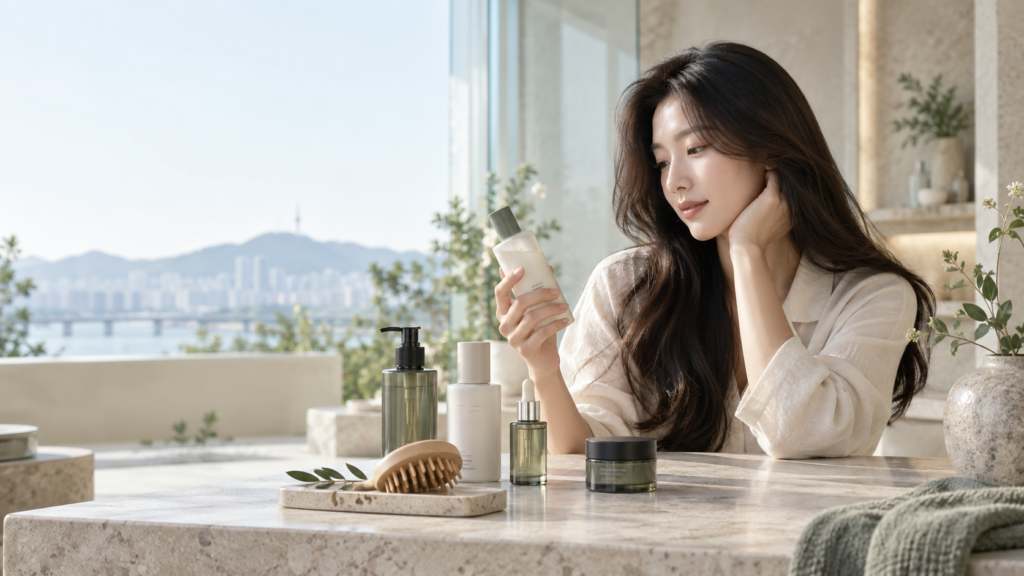
    Woman with long dark hair seated beside a bright window with hair care bottles on the table.

    You wash your hair, get that fresh-root feeling, and by tomorrow your part already looks shiny. Meanwhile, your ends still feel like straw. Buying a shampoo labeled “for oily hair” can make the lengths feel worse; grabbing a rich “repair” formula can leave the roots flat. Before you buy a fifth bottle, figure out which part of the routine is actually letting you down.

    Quick reality check: oily roots and dry ends are two different shopping jobs. Your shampoo needs to make sense for your scalp. Conditioner and leave-in care need to make sense for your lengths.

    What you notice after 24 hours Check first Product direction to compare
    Roots look slick, ends feel fine How often you wash and whether scalp products build up A scalp-focused cleanser
    Roots look slick, ends feel rough Where shampoo and conditioner go Scalp cleanser plus length-focused conditioner
    Hair feels heavy right after drying Rich masks, oils or leave-ins near the roots A lighter routine at the scalp
    Scalp stings, flakes heavily or becomes painful Discomfort beyond ordinary oiliness Professional assessment rather than another blind purchase

    First, stop treating your scalp and ends as one hair type

    Your roots can get oily while your lengths need more slip and conditioning. That’s why one “oily hair” label rarely tells the whole story. The American Academy of Dermatology suggests adjusting wash frequency to how oily your scalp gets and applying shampoo mainly to the scalp. It also advises conditioner for the hair, with placement depending on hair type. See the dermatologist guidance.

    For your next wash, do a quick split test: work shampoo through the scalp, rinse, and put conditioner where the hair feels rough. If your hair is fine or easily weighed down, start at the mid-lengths and ends rather than coating the roots. If your hair is curly or very dry, your conditioning needs may be different—follow how your hair responds instead of a one-size-fits-all rule.

    The 24-hour root check: four things to notice

    1. When does the oil show up?

    Is your part shiny by bedtime, the following morning, or only after a workout? The timing helps you compare your current wash schedule with the results you actually want. Washing an oily scalp daily can be reasonable for some hair types; forcing a longer gap isn’t a badge of honor.

    2. Does your hair feel heavy immediately?

    If your roots look flat as soon as they dry, look at what’s touching them. A rich conditioner, leave-in, oil or styling cream near the part can change how clean the hair looks. Move one product away from the roots for a few washes before replacing everything.

    3. Are you washing the lengths too aggressively?

    Shampoo belongs primarily at the scalp. Let the rinse run through your lengths instead of scrubbing fragile ends as if they produce oil, too. For conditioner or a leave-in, start with a small amount where your hair feels dry. Dermatologists recommend keeping leave-in conditioner from mid-strands to ends rather than on the scalp. Read their leave-in tips.

    4. Is the issue actually scalp discomfort?

    Oiliness alone is one thing. Persistent redness, pain, significant flaking or sudden shedding is a different conversation. Don’t expect a viral Korean shampoo or a matching quiz to diagnose it; get medical advice if those symptoms persist.

    How to shop Korean hair care without buying the same mistake twice

    Start with your scalp profile, then add your hair condition and desired finish. An oily scalp with fine, flat hair may call for a different comparison than an oily scalp with bleached, rough lengths. The words “scalp scaling,” “volume,” and “damage care” describe different product directions; none guarantees that the product will fit you personally.

    Want a starting point in about 30 seconds? Try the K-GORUDA Hair & Scalp Matching Quiz. Answer four questions about your scalp, concern, hair type and desired result, then compare the suggested options and their product details before shopping.

    If you want named product directions rather than a routine check, read our Korean shampoo comparison for oily scalp and dry ends. For the longer explanation of why this combination happens, see our greasy-roots-and-dry-ends guide. Neither article is a hands-on product test; check the current formula and retailer terms yourself.

    Try one change at the next wash

    Pick one variable: scalp wash frequency, conditioner placement, or the amount of leave-in near your roots. Keep the rest of your routine steady long enough to notice what changed. That’s a lot more useful than ordering another entire lineup because somebody’s “holy grail” looked good on camera.

    When you’re ready to compare Korean products for your own scalp and lengths, start the K-GORUDA Matching Quiz. Use the recommendations as a shortlist, then verify the exact ingredients, price and shipping in your region.

    If your roots get oily but lightweight products still seem to sit on your strands, hair porosity may be another useful clue. Read the low-porosity hair and oily scalp routine for a more specific shampoo and conditioning comparison.

    Disclosure: K-GORUDA is an independent product discovery platform. This article contains informational and non-commission internal links. Product matching is an editorial aid, not a medical diagnosis or a guarantee of results.

  • Why Is My Hair Greasy the Day After Washing but Dry at the Ends? A Korean Hair Care Guide

    Is your hair greasy the day after washing but dry at the ends? You bought a shampoo that promised clean, bouncy hair. By the next afternoon, your roots looked greasy again—while your ends somehow felt even drier. Buying another “moisturizing” shampoo might leave your scalp feeling heavy. Going for a stronger cleanser might make your lengths feel rough. Sound familiar?

    The trick is to stop asking one product to treat two different parts of your hair in exactly the same way.

    If this sounds like you Start with Pay attention to
    Your roots get oily quickly, but your ends feel dry A shampoo chosen for your scalp Whether your lengths need conditioner separately
    Your hair feels flat soon after washing A lightweight scalp routine Heavy products applied close to the roots
    Your ends feel rough or look damaged Care focused on the mid-lengths and ends How your hair feels after several washes
    Your scalp feels uncomfortable as well as oily A gentle approach to cleansing Persistent irritation that may need professional advice

    Hair greasy the day after washing: why your ends can still feel dry

    Your scalp produces oil; the older hair at your ends does not. That means greasy roots and dry lengths can show up together. It also explains why a bottle labeled “for dry hair” may feel lovely on your ends but too rich at your roots.

    When you shop, choose your shampoo around your scalp, then choose the rest of your routine around your hair lengths. It’s a much more useful starting point than trying to label all your hair simply “oily” or “dry.”

    How to choose a Korean shampoo for oily roots and dry ends

    Start with the feeling at your roots

    Ask yourself when the oiliness appears: by the evening of wash day, the next morning, or later? Also notice whether your scalp feels comfortable after washing. “Squeaky clean” can sound appealing, but your scalp shouldn’t feel uncomfortably tight just to make your roots look fresh.

    Keep richer care where you need it

    If your ends feel dry, work conditioner or a treatment through the mid-lengths and ends. Begin with a small amount and keep it away from the roots if your hair gets flat easily. You can adjust from there based on how your hair actually feels.

    Compare products against your whole profile

    An oily scalp does not automatically tell you whether your hair is fine, thick, damaged, or color-treated. Those details matter when you’re deciding between products that appear to solve the same problem.

    Want to find a better-fitting Korean hair product in about 30 seconds? Try the Goruda Matching Program and compare matches based on your scalp, hair type, main concern, and desired result.

    The shopping mistake that gets expensive fast

    It’s tempting to buy the shampoo from a viral routine and copy every step. But if that person has a dry scalp and thick hair while you have oily roots and fine, dry ends, you’re solving different problems.

    Before adding a product to your cart, check three things:

    1. Scalp fit: Is it intended for the way your scalp feels?
    2. Hair fit: Will the routine work with your hair’s texture and condition?
    3. Product purpose: Is it meant to cleanse your roots or care for your lengths?

    That quick check can save you from buying another bottle that looks perfect in a review but feels wrong after your first wash. For specific Korean shampoo options, see our oily scalp and dry ends product comparison.

    Your next wash is a useful test

    Use the shampoo on your scalp, rinse thoroughly, and apply your conditioning product mainly to your lengths. Then notice how your roots and ends feel later that day and the following morning. If your roots feel heavy, revisit what you’re putting near them. If your ends still feel rough, adjust the care you give your lengths.

    You don’t need to buy an entire new routine to learn what your hair needs. Start by matching the first product to the right part of your hair.

    Ready to narrow down your options? Try the Goruda Matching Program to find Korean hair and scalp products matched to your answers, then compare them before you shop.

  • Oily Scalp, Dry Hair Ends? How to Choose a Korean Shampoo Without Guessing

    An oily scalp and dry hair ends can make choosing shampoo confusing. Your roots need a wash, but your ends feel like they need a break. Sound familiar? A single label such as “oily hair” doesn’t tell the whole story. Decide which area bothers you most between washes, then compare the product’s stated purpose.

    Oily scalp and dry ends: match the shampoo to the job

    What you noticePriorityProduct directionCheck before purchase
    Roots feel coated or oily quickly; lengths are comparatively manageable.Scalp cleansingAROMATICA Rosemary Scalp Scaling ShampooIngredients, essential-oil scent and scalp comfort
    Your scalp feels oily but you want a regular-cleanse direction.Regular scalp cleansingDr.FORHAIR Aero Purifying ShampooCurrent formula, use directions and shipping region
    Ends feel rough or processed; scalp oil is secondary.Damaged-hair careUNOVE Deep Damage Repair ShampooWhether its hair-care focus fits your scalp and routine

    These are editorial starting points based on each maker’s published description, not measured match scores or a diagnosis. If scalp oil and dry lengths matter equally, compare scalp-focused and damage-focused directions in the K-GORUDA Hair & Scalp Finder.

    If the roots are your first complaint

    Look at AROMATICA Rosemary Scalp Scaling Shampoo. AROMATICA positions it around scalp buildup and cleansing. If your roots feel coated while your ends are dry, evaluate it on the scalp concern it is designed to address. Its listed formula includes rosemary essential oil, so check the full ingredient list if fragrances or botanical oils bother you. Read the manufacturer’s product details.

    See the K-GORUDA AROMATICA product overview if you want the scalp-focused direction in more context.

    Prefer another scalp-cleanse direction? Dr.FORHAIR Aero Purifying Shampoo is presented as a lightweight clarifying option for regular use. The maker reports test figures for oil and buildup, but those are the brand’s claims and don’t predict your individual result. Read the manufacturer’s product details.

    Found a scalp-focused candidate? Check its latest ingredient list, bottle size and retailer delivery terms.

    See AROMATICA Rosemary Scalp Scaling Shampoo ↗ · See Dr.FORHAIR Aero Purifying Shampoo ↗

    If the dry ends are what you keep noticing

    Take a look at UNOVE Deep Damage Repair Shampoo as a damaged-hair direction. The brand describes it as a pH-balanced cleansing formula designed for damaged hair. That doesn’t automatically make it the best answer for an oily scalp. Compare the two concerns separately before choosing. Read the manufacturer’s product details.

    Read the K-GORUDA UNOVE product overview to compare why it may suit damaged lengths and check its current purchase options.

    A simple routine check can help: apply shampoo primarily to the scalp, then choose a conditioner or treatment for the lengths based on how they feel. If a product causes persistent discomfort, stop using it and reassess. One shampoo doesn’t need to solve every concern.

    If your roots turn greasy again the day after washing, read our guide to greasy roots and dry ends after washing for a simple routine check before comparing products.

    Before buying shampoo for an oily scalp

    Compare the exact product name and variant, rather than relying on the brand alone. A scalp-cleansing shampoo and a damage-care shampoo from the same range may have different purposes. Read the directions on the bottle you plan to purchase, and check whether the retailer shows the current ingredient list.

    Also compare the total delivered cost: bottle size, shipping fees and any conditions for returns. A lower item price is less useful if delivery is unavailable to your country. Keep a note of your current shampoo and what you want to improve, so you can judge a replacement against your own routine rather than a product photo.

    Still deciding? Answer the four questions in the Hair & Scalp Finder, then compare your Best Match with the alternatives and read the actual product details.

    Once one formula looks promising, verify that exact product, ingredients, price and shipping with the retailer before buying.

    See UNOVE Deep Damage Repair Shampoo ↗ — confirm the current formula and shipping at the brand store.

    Disclosure: The product links in this article are non-commission product-reference links. K-GORUDA has not verified any affiliate commission for them. This guide is based on manufacturers’ published descriptions, not hands-on testing.

  • LABO-H Scalp Strengthening Shampoo

    LABO-H Scalp Strengthening Shampoo

    A scalp-strengthening shampoo designed for oily scalps and fine, thin hair. Helps cleanse excess oil while supporting scalp care and adding a lightweight, refreshed feel to the hair.

    Best For

    Oily Scalp · Fine & Thin Hair · Volume & Strength

    Key Benefits

    • Helps cleanse excess scalp oil
    • Supports scalp and hair-strengthening care
    • Suitable for fine and thin hair
    • Leaves hair feeling lightweight and refreshed

    Why K-GORUDA Recommends It

    This product ranks highly for users with an oily scalp, fine and thin hair, and a goal of improving volume and strength. K-GORUDA matches your scalp type, main concern, hair type, and desired result to help you compare products that fit your needs.

    Good to Know

    If dryness, sensitivity, or scalp irritation is your main concern, a gentler or more moisturizing formula may be a better match. Product suitability can vary depending on individual scalp and hair conditions.

    Where to Buy

    Verified purchase options are being reviewed. K-GORUDA prioritizes official brand stores and trusted retailers when providing purchase links.